




Aluminium cans are one of the easiest recyclables to collect for money in South Africa, but the payout is usually smaller than people expect at first. The reason is simple: cans are light. You need a lot of them to make one kilogram.
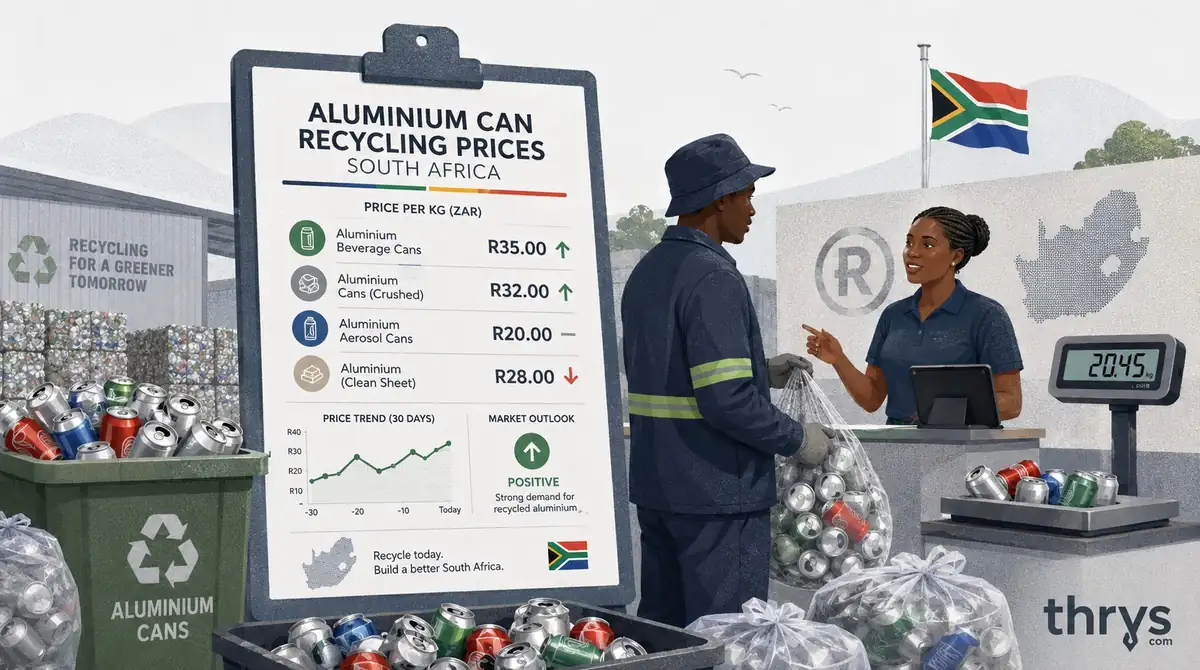
As a working guide, clean aluminium beverage cans can pay roughly R13 to R23 per kg in South Africa. Some buyers may pay less, especially for small, dirty or mixed loads. Some quoted scrap-price platforms show higher indicative prices, but the amount you actually receive depends on the buyer, area, weight, cleanliness and whether the cans are properly sorted.
This guide explains what aluminium cans pay, how many cans make 1 kg, and how to prepare your cans before taking them to a buy-back centre or scrap yard.
Aluminium can recycling price per kg in South Africa
Here is a practical price guide for used aluminium beverage cans.
| Type of can load | Indicative price per kg | What it means |
|---|---|---|
| Small mixed household bag | R5 to R13/kg | May include dirty, wet or mixed cans; often paid lower |
| Clean aluminium cans | R13 to R23/kg | Better range for clean, dry cans taken to the right buyer |
| Large clean sorted load | R18 to R23+/kg | More likely when volume is good and the buyer wants used beverage cans |
| Baled commercial load | Quote-based | Usually for suppliers meeting stricter volume and cleanliness requirements |
Do not treat these numbers as a guaranteed offer. Phone the buyer first and ask what they are paying for used beverage cans, sometimes called UBCs.
How many aluminium cans make 1 kg?
You usually need about 60 to 70 empty aluminium cans to make 1 kg. The exact number depends on the can size and weight.
That means:
| Approximate cans collected | Approximate weight | Value at R13/kg | Value at R23/kg |
|---|---|---|---|
| 70 cans | 1 kg | R13 | R23 |
| 350 cans | 5 kg | R65 | R115 |
| 700 cans | 10 kg | R130 | R230 |
| 3,500 cans | 50 kg | R650 | R1,150 |
This is why can recycling works better when you collect regularly from a source with volume, such as a school, tavern, event venue, office park, restaurant, sports club or neighbourhood collection route.
Are all drink cans aluminium?
No. Some cans are aluminium and some are steel or tin-plated steel. Buyers may separate them because they do not pay the same price.
A simple magnet test helps:
- If the magnet sticks, the can is steel.
- If the magnet does not stick, it is likely aluminium.
Do not mix steel cans into an aluminium-can bag if the buyer pays aluminium cans separately. Mixed loads can be downgraded or rejected.
Why one buyer pays more than another
Aluminium can recycling prices differ because buyers are not all buying the same thing in the same way.
The final price can change because of:
- your city or province
- the buyer’s current demand
- whether the cans are clean and dry
- whether steel cans are mixed in
- whether the cans are loose, crushed or baled
- the total weight you bring
- transport costs
- daily scrap aluminium prices
A small bag from home may receive a lower rate than a large, clean, sorted load from a regular collector.
Should you crush aluminium cans?
Crushing cans usually helps with storage and transport because cans take up a lot of space. A crushed bag can hold more weight than an uncrushed bag.
Before crushing, check two things:
- The cans are empty and dry.
- The buyer accepts crushed cans.
Most scrap yards and buy-back centres accept crushed cans, but it is still worth asking. If the buyer wants to inspect the material before paying, very dirty crushed cans may be a problem.
How to get the best price for aluminium cans
The best price usually goes to clean, dry, sorted cans in a useful quantity.
Before selling:
- Empty every can.
- Rinse sticky cans if possible.
- Let the cans dry before bagging them.
- Remove food waste, plastic, glass and paper from the bag.
- Use a magnet to separate steel cans.
- Crush cans to save space if your buyer accepts them.
- Phone two or three buyers before you travel.
- Ask for the price per kg, not the price per bag.
If transport costs more than the cans are worth, wait until you have more weight or join with neighbours, a school or a small business.
Where to sell aluminium cans in South Africa
You can usually sell aluminium cans at:
- recycling buy-back centres
- scrap metal dealers
- waste reclaiming depots
- community recycling projects
- some packaging recycling centres
- collectors who buy from households and resell in bulk
Search for buy-back centres in your area and phone before going. Ask whether they buy aluminium cans, what they pay per kg, whether they accept loose or crushed cans, and whether they require a minimum weight.
If you are selling other metals too, see the scrap metal prices guide and keep aluminium cans separate from copper, brass, steel and mixed aluminium.
Is collecting aluminium cans a good side hustle?
It can be a useful small side hustle, but it is not quick money unless you have steady volume.
For one household, cans may only bring in small amounts now and then. For someone collecting from many households, taverns, schools or events, the weight can build faster.
The best setup is:
- one or more regular collection points
- bags or drums clearly marked for cans
- a weekly or monthly collection day
- a nearby buyer who accepts aluminium cans
- a simple record of weight and payout
If you are trying to start from zero, begin by finding the buyer first. Then find the cans. Many people collect bags of recyclables and only later discover the nearest centre does not buy that material.
Aluminium cans vs other recyclables
Aluminium cans usually pay more per kg than cardboard, paper, glass and many plastic bottles. But they are light, so volume is the hard part.
Scrap copper and brass pay much more per kg, but they are harder to collect legally and consistently. Steel is easy to find, but it pays much less per kg.
For a beginner recycling side hustle, aluminium cans are useful because they are easy to recognise, easy to store and accepted by many buyers.
Frequently asked questions
How much do aluminium cans pay per kg in South Africa?
Clean aluminium cans can pay roughly R13 to R23 per kg, depending on the buyer, area, weight and cleanliness. Some small or mixed loads may pay less.
How many cans make 1 kg?
It usually takes about 60 to 70 empty aluminium cans to make 1 kg. The exact number depends on the can size and weight.
Are Coke cans aluminium in South Africa?
Many beverage cans are aluminium, but not all cans should be assumed to be aluminium. Use a magnet test. If the magnet sticks, the can is steel. If it does not stick, it is likely aluminium.
Should I crush cans before selling them?
Usually yes, because crushed cans take up less space. But ask your buyer first, especially if you are selling a large load.
Do dirty cans pay less?
They can. Wet, sticky or dirty cans are harder to handle and may be downgraded. Empty and dry cans are better.
Where can I sell aluminium cans?
Try recycling buy-back centres, scrap yards, community recycling projects and waste reclaiming depots near you. Phone first to confirm that they buy aluminium cans and ask for the current price per kg.
Is aluminium can recycling profitable?
It can be profitable as a small side hustle if you collect enough volume and keep transport costs low. A few household bags will not make much money, but regular collection from businesses, events or schools can build useful weight.
What is the difference between aluminium cans and scrap aluminium?
Aluminium cans are one type of scrap aluminium. Clean aluminium sheet, window frames and extrusion usually pay more per kg than cans because they are denser and easier to process.