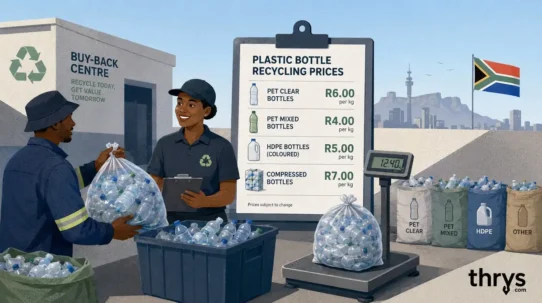

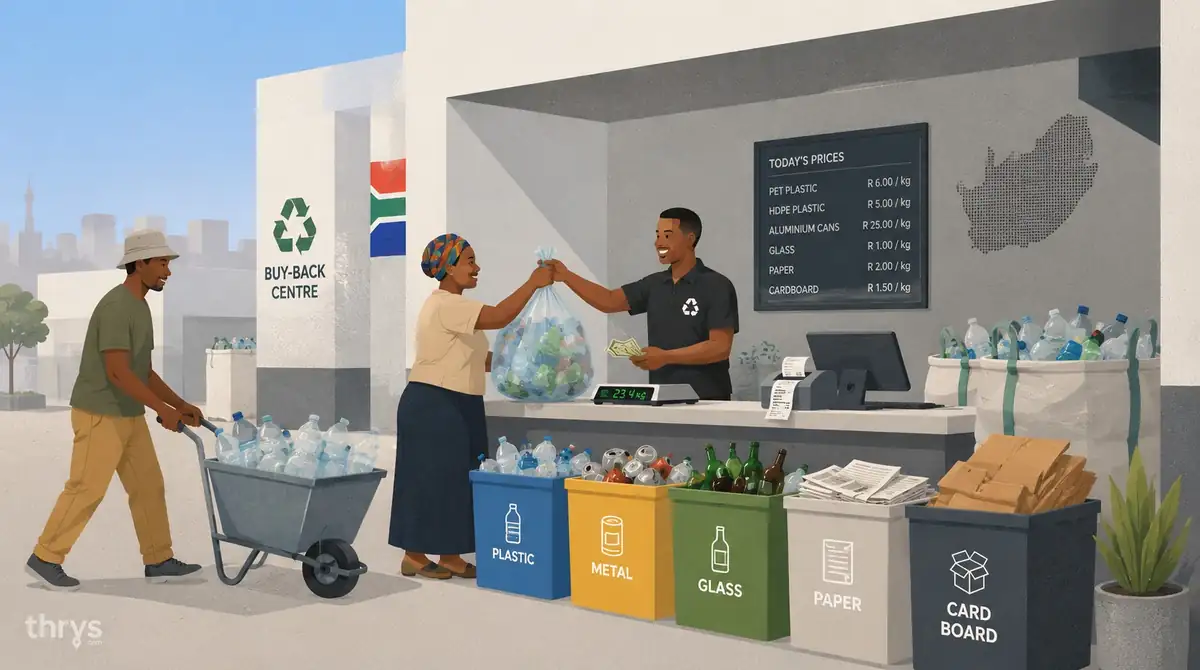

Recycling buy-back centres are places where collectors, households, schools and small businesses can sell recyclable material by weight. Instead of dropping everything in a free recycling bin, you take sorted material to a centre, it gets weighed, and you are paid according to the type, quality and current price.
The most important thing to know is that not every centre buys the same materials. One centre may buy PET bottles and cans, another may focus on cardboard and paper, while a scrap yard may be better for copper, aluminium, brass and steel.
Before you collect bags of material, find the buyer first.
What is a recycling buy-back centre?
A buy-back centre is a depot that purchases recyclable material from the public or from collectors. The centre may sort, bale, store and resell the material to larger recyclers, mills, processors or packaging recovery networks.
Common sellers include:
- waste pickers
- households
- schools
- churches
- taverns and restaurants
- small shops
- offices
- event venues
- informal collectors
- community recycling projects
Some centres pay cash, some pay by EFT, and some use wallet or programme-based payment systems. Always ask before you travel.
What materials do buy-back centres buy?
Most buy-back centres focus on packaging and household recyclables.
| Material | Common examples | Notes |
|---|---|---|
| PET plastic | Cooldrink bottles, water bottles | Often sorted into clear and coloured PET |
| HDPE plastic | Milk bottles, detergent bottles | May pay differently from PET |
| Aluminium cans | Beverage cans | Should be clean, dry and separate from steel cans |
| Steel cans | Food tins, some drink cans | Usually priced separately from aluminium |
| Cardboard | Boxes, shop packaging | Must be dry and flattened |
| Paper | Office paper, newspaper, mixed paper | Keep dry and clean |
| Glass | Bottles and jars | Some centres accept glass, others do not |
| Scrap metal | Copper, brass, aluminium, steel | Better handled by scrap yards or metal recyclers |
| E-waste | Old electronics | Accepted only by some specialist centres |
Do not assume a centre buys everything. Phone first and ask what they currently accept.
Where to find recycling buy-back centres
Start with these places:
- PETCO’s buy-back centre directory by province.
- PETCO’s drop-off and recycling location resources.
- Your municipality’s solid-waste or recycling page.
- Local scrap yards if you are selling metal.
- Community recycling projects in your area.
- Recycling businesses that collect from schools, complexes and offices.
PETCO lists buy-back centres across provinces including Gauteng, Eastern Cape, Free State, KwaZulu-Natal, Limpopo, Mpumalanga, North West, Northern Cape and Western Cape. The list includes centre names, towns, contact people and phone numbers, but you should still call because recycling infrastructure differs by area and centres can change what they accept.
Buy-back centres in Johannesburg and Gauteng
For Johannesburg and Gauteng, check:
- PETCO’s Gauteng buy-back centre list
- Pikitup and City of Johannesburg recycling pages
- local scrap yards for metal
- private recycling companies that service offices, schools and complexes
- community buy-back centres in townships and industrial areas
Gauteng has many recycling and scrap-metal buyers, but the best centre depends on your material. PET bottles and cans may go to a packaging buy-back centre. Copper, brass, aluminium and steel should usually go to a registered scrap dealer.
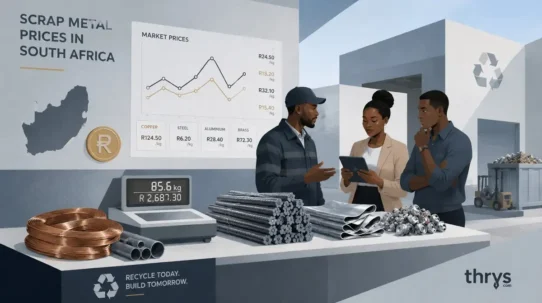
If you are selling metal, compare your material against the scrap metal prices guide before accepting a price.
Buy-back centres in Durban and eThekwini
eThekwini lists several buy-back centres and community drop-off centres on its cleansing and solid waste page. The listed buy-back centres include areas such as North Coast Road, Westmead, Lorne Street, Brook Street, Escom Road and KwaMashu.
Durban also has private recyclers and collectors that may buy material directly or collect larger loads.
Phone before going and ask:
- whether the centre still operates at that address
- what materials they buy
- what price they are paying today
- whether they buy small household loads
- whether payment is cash, EFT or another method
Buy-back centres in Cape Town and the Western Cape
Cape Town has a mix of municipal drop-off options, private recyclers and community buy-back projects.
PETCO lists Western Cape buy-back centres, and local projects such as WasteGo Green in Milnerton show how a community buy-back model works: collectors bring clean, sorted recyclables, the material is weighed, and payment is based on the material type and weight.
Cape Town and Western Cape buyers may accept:
- PET bottles
- HDPE plastic
- plastic film
- mixed paper
- cardboard
- aluminium cans
- steel cans
- glass bottles and jars
Check each centre’s list before travelling, because one buyer may accept glass while another may not.
What to ask before you go
This is the part that saves wasted trips.
Phone the centre and ask:
- Do you buy from the public?
- What materials are you buying today?
- What is the price per kg for each material?
- Do you pay different prices for clear PET and coloured PET?
- Do you buy aluminium cans and steel cans separately?
- Do you buy cardboard if it is slightly wet?
- Do you require a minimum weight?
- Do you pay cash, EFT or wallet?
- What time do you stop accepting material?
- Do I need ID?
Prices and accepted materials can change. A two-minute phone call can save you a full wasted trip.
How to prepare recyclables before selling
Most centres pay better for clean, sorted material.
Do this before you go:
- empty bottles and cans
- rinse sticky containers if possible
- let items dry
- separate plastic, cans, paper, cardboard and glass
- keep clear PET away from coloured PET if your buyer prices them differently
- separate aluminium cans from steel tins
- flatten cardboard
- keep paper and cardboard dry
- remove food waste and general rubbish
- bag each material separately
If you are collecting for money, sorting is not a small detail. It is the difference between a better price, a lower price, or rejection.
What prices can you expect?
Recycling prices are not fixed nationally. They change by material, area, buyer, demand and cleanliness.
As a rough guide:
- PET plastic bottles may pay around R3/kg.
- HDPE containers may pay around R2.50 to R5/kg.
- Aluminium cans may pay around R13 to R23/kg.
- Cardboard and paper usually pay much less per kg.
- Glass often pays low rates and may not be accepted everywhere.
- Copper, brass and other metals can pay much more but should be sold through scrap-metal buyers.
For detailed price guides, see:
Buy-back centre vs drop-off site vs scrap yard
These are not the same thing.
| Option | Best for | Usually pays? |
|---|---|---|
| Buy-back centre | Bottles, cans, paper, cardboard, some metals | Yes |
| Drop-off site | Household recycling disposal | Often no |
| Scrap yard | Copper, brass, aluminium, steel, lead, stainless steel | Yes |
| Collection service | Homes, offices, schools, complexes | Sometimes, depending on service |
| Municipal garden/refuse site | Waste disposal and some recycling streams | Usually no payment |
If your goal is to earn money, confirm that the place is a buy-back centre, not only a drop-off point.
Can you start a small collection route?
Yes, but start small and build around a confirmed buyer.
A simple setup:
- Choose two or three materials your nearest centre buys.
- Start with PET bottles, aluminium cans and cardboard.
- Arrange collection points at homes, schools, shops or small businesses.
- Use labelled bags or drums.
- Collect on a fixed day.
- Weigh each material before selling if you can.
- Track transport cost, weight and payout.
Do not collect everything. Collect what your buyer pays for and what you can transport cheaply.
Common mistakes to avoid
Avoid these:
- collecting before finding a buyer
- mixing wet waste with clean recyclables
- mixing aluminium cans with steel cans
- putting glass into bags meant for plastic
- assuming all centres pay the same price
- travelling with a small load that does not cover transport
- keeping cardboard outside where it gets wet
- selling scrap metal without comparing prices
- accepting a “per bag” price when you do not know the weight
The more organised your material is, the easier it is to negotiate and repeat the route.
Frequently asked questions
What are recycling buy-back centres?
Recycling buy-back centres are depots where people can sell recyclable materials such as plastic bottles, cans, paper, cardboard, glass and sometimes scrap metal by weight.
Do recycling centres pay cash?
Some do, but not all. Some pay by EFT, wallet or programme payment. Ask before going.
Where can I sell recyclables in South Africa?
Start with PETCO’s buy-back centre directory, your municipality’s recycling page, local community recycling projects and nearby scrap yards for metal.
Do buy-back centres buy plastic bottles?
Many do, especially PET bottles, but each centre decides what it accepts. Phone first and ask whether they buy clear PET, coloured PET and HDPE.
Do buy-back centres buy aluminium cans?
Many buy aluminium cans, but they may pay a different rate from steel cans. Keep aluminium cans clean, dry and separate.
Is a recycling drop-off site the same as a buy-back centre?
No. A drop-off site may accept recyclables without paying you. A buy-back centre pays for accepted materials by weight.
Do I need ID to sell recyclables?
For ordinary packaging recyclables, requirements vary by centre. For scrap metal, buyers are more likely to ask for ID and other details because the trade is regulated.
Can I sell scrap metal at a buy-back centre?
Some centres buy metal, but scrap yards and registered metal recyclers are usually better for copper, brass, aluminium, steel and stainless steel.