


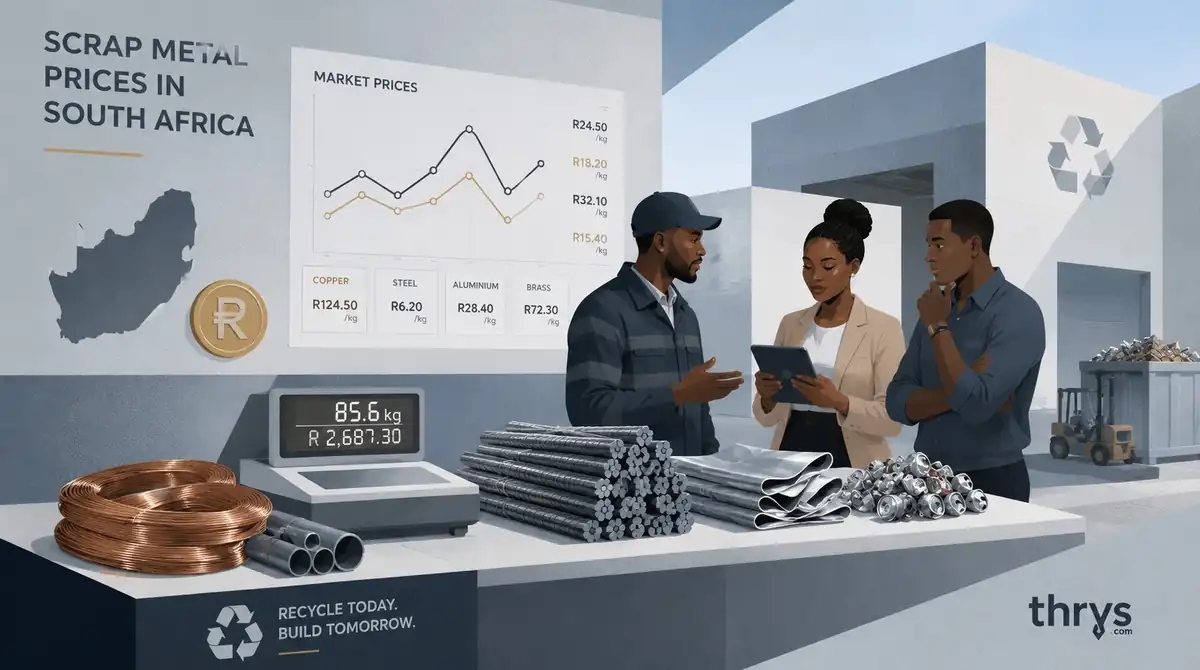

Scrap metal prices in South Africa can range from about R1 to R4 per kg for common steel and iron to well over R100 per kg for clean copper. That is why two people can arrive at a scrap yard with the same bakkie load and leave with very different money.
The metal type matters. The grade matters. Clean material pays more than mixed or dirty scrap. The city, dealer, weight and daily commodity price also affect the final offer.
This guide gives you a practical price-per-kg view before you load your scrap, phone a buyer or accept the first number you are given.
Prices below are indicative only. Scrap yards change their prices often, and the final amount is usually confirmed after the material is weighed and graded.
Scrap metal price per kg in South Africa
Here is a working guide to common scrap metal prices per kg in South Africa.
| Scrap metal type | Indicative price per kg | What affects the price |
|---|---|---|
| Copper | R105 to R190/kg | Clean bright wire pays most; burnt, insulated or mixed copper pays less |
| Brass | R25 to R155/kg | Red brass, bronze and heavy brass usually beat mixed fittings and shavings |
| Aluminium | R5 to R45/kg | Clean sheet and extrusion pay more than cans, oily turnings or mixed aluminium |
| Stainless steel | R5 to R32/kg | 316 stainless usually pays more than 304, 430 or mixed stainless |
| Lead | R9 to R24/kg | Clean soft lead pays more than mixed or battery lead |
| Steel and iron | R1.20 to R4/kg | Heavy steel pays more than light sheet metal and mixed iron |
| Aluminium cans | R13 to R23/kg | Clean, dry and crushed cans are easier to sell |
Treat these as planning ranges, not a guaranteed offer. A scrap dealer may pay less if your metal is dirty, mixed with other materials, badly sorted, wet, oily, painted, burnt, or difficult to identify.
Why scrap metal prices change
Scrap metal is not priced like a fixed shop product. It moves because recyclers and scrap yards are buying material that will be resold, melted, exported, processed or supplied into another industrial chain.
The price you receive can change because of:
- international metal prices
- the rand-dollar exchange rate
- local demand from mills, foundries and recyclers
- transport costs
- the amount of scrap you bring in
- how clean and sorted the material is
- whether the buyer can legally accept that material
That is why one website may show copper at one range while a dealer in your area gives a different quote. The useful question is not only “what is the price per kg?” It is also “what grade is my scrap, and what will this specific yard pay today?”
Copper scrap price per kg
Copper is usually the highest-paying common scrap metal in South Africa.
Clean bright copper wire is at the top because it is easy to identify and has high recoverable metal value. Copper pipe, busbar, clean copper sheet and stripped cable can also pay well.
Lower prices apply to:
- burnt copper wire
- insulated copper wire
- mixed copper
- copper with solder, tar, paint or fittings attached
- electric motor copper
- contaminated copper
If you have copper cable, do not burn it to remove the plastic. Burnt cable can reduce the price, and dealers may ask questions about where it came from. South African rules around controlled metals are strict because copper theft affects electricity, rail, telecoms and municipal infrastructure.
Aluminium scrap price per kg
Aluminium has a wide price range because the grades are very different.
Clean aluminium sheet, window frames and extrusion usually pay more than mixed aluminium. Cast aluminium from engine parts and machinery can also have value, but the rate depends on the alloy and contamination.
Aluminium cans are easier for ordinary collectors to understand, but they do not always pay the same as clean aluminium extrusion. They are light, so you need a lot of cans to make a meaningful weight.
To get a better aluminium price:
- keep cans dry
- remove obvious rubbish
- separate cans from steel tins
- keep clean aluminium frames separate from dirty mixed aluminium
- ask the buyer if they price cans separately from other aluminium
Brass scrap price per kg
Brass can be valuable, especially if it is clean and easy to identify.
Common brass scrap includes:
- taps
- valves
- plumbing fittings
- ornaments
- locks
- brass shells and casings
- brass radiators
- bronze and red brass items
Mixed brass pays less when steel, plastic, rubber or other fittings are still attached. If you are allowed to remove attachments safely, sorting the brass before you sell can improve the price.
Steel and iron scrap price per kg
Steel and iron usually pay much less per kg than copper, brass or aluminium. That does not mean they are useless. The money is in the weight.
Heavy steel, machinery parts, thick plate and structural steel generally pay more than light sheet metal, rusted mixed scrap or thin offcuts. A small bag of steel is rarely worth a special trip, but a garage cleanout, workshop pile, old gate, appliance load or building-site offcut pile can add up.
If transport will cost more than the scrap is worth, phone the yard first. Some buyers collect larger loads, but they may only do that when the weight is high enough.
Stainless steel scrap price per kg
Stainless steel is not all the same.
Grade 316 usually pays more than 304 because it contains more valuable alloying elements. Grade 430 and mixed stainless usually pay less. Some stainless is magnetic, some is not, and not every seller can identify the grade at home.
If you have a large stainless load, ask the buyer whether they test it, grade it separately, and pay different rates for 316, 304 and mixed stainless.
Lead scrap price per kg
Lead can come from old pipes, roof flashing, wheel weights, fishing sinkers and some industrial materials. Clean soft lead normally pays more than mixed lead.
Be careful with lead. It is toxic, and you should avoid cutting, heating, melting or creating dust from it at home. If you are not sure what you have, speak to a proper recycler before handling it further.
How to get the best scrap metal price
The person who arrives with clean, sorted, legal scrap usually has a stronger position than the person who arrives with a mixed pile.
Before selling, do this:
- Separate metals by type.
- Keep copper, brass, aluminium, stainless steel, lead and steel apart.
- Remove obvious plastic, rubber, wood and dirt where practical.
- Keep cans dry.
- Weigh the material if you can.
- Phone two or three buyers before you go.
- Ask whether the price is per kg and whether it changes by grade.
- Take your ID and any proof of where the scrap came from.
Do not strip stolen cable, buy suspicious metal or sell infrastructure material without a lawful explanation. A higher price is not worth a criminal problem.
What documents do scrap yards ask for?
South Africa regulates second-hand goods and scrap metal dealers. Dealers and recyclers are expected to keep records, and controlled metals such as copper, aluminium, zinc, lead, brass, bronze, nickel, tin and others are specifically listed under the Second-Hand Goods Act.
In practice, a scrap yard may ask for:
- your South African ID, passport or other identification
- your phone number and address
- vehicle registration details
- proof of where the scrap came from, especially for higher-risk material
- company documents if you are selling as a business
- banking details for EFT payment
Rules can vary by buyer and by material, but a serious recycler should not treat anonymous scrap sales casually.
Should you sell to a scrap yard, buy-back centre or collector?
Use a scrap yard or registered recycler for metal, especially copper, brass, aluminium, stainless steel, lead and steel.
Use a recycling buy-back centre for household recyclables such as plastic bottles, cans, paper, cardboard and glass. Some buy-back centres also accept scrap metal, but others focus only on packaging materials.
Use a collector when you have a large load and transport is the problem. Just confirm how they calculate weight, what price they are using and whether collection fees reduce the final payout.
Is collecting scrap metal a good side hustle?
It can be, but only if you understand weight, transport and sorting.
Copper, brass and aluminium can produce useful money from smaller weights, but they are harder to find legally. Steel and iron are common, but the price per kg is low, so you need volume. Cans and plastic bottles are easier to collect, but they require many bags before the payout feels meaningful.
The best beginner approach is to start with what is already around you:
- aluminium cans from events, shops or households
- cardboard from small stores
- clean plastic bottles
- old appliances with permission from the owner
- legal workshop offcuts
- household metal from cleanups
Find a buyer first. Then collect. Many beginners do it the other way around and end up with bags of material that nobody nearby wants to buy.
Frequently asked questions
What is the scrap metal price per kg in South Africa?
Scrap metal prices in South Africa vary by metal and grade. Steel may pay around R1.20 to R4 per kg, while clean copper can pay above R100 per kg. Aluminium, brass, stainless steel and lead sit between those ranges depending on quality.
What scrap metal pays the most?
Copper usually pays the most among common scrap metals. Clean bright copper wire normally beats mixed copper, aluminium, brass, stainless steel, lead and steel.
How much is copper scrap per kg in South Africa?
Indicative copper scrap prices can range from about R105 to R190 per kg depending on the grade. Clean bright wire pays more than burnt, insulated, mixed or contaminated copper.
How much is aluminium scrap per kg?
Aluminium can range from about R5 to R45 per kg depending on whether it is clean extrusion, sheet, cast aluminium, cans, turnings or mixed dirty aluminium.
How much do aluminium cans pay per kg?
Indicative aluminium can prices in South Africa are often around R13 to R23 per kg, but the rate depends on the buyer, the area and whether the cans are clean, dry and sorted.
Is steel scrap worth selling?
Steel is worth selling when you have enough weight. The price per kg is low compared with copper and brass, but heavy steel loads can still be worthwhile.
Can I sell copper cable?
You can only sell copper cable if it is legally yours and the buyer is willing to accept it. Dealers may ask for identification and proof of origin. Burnt cable and suspicious infrastructure material can create legal problems.
Do scrap yards pay cash?
Some recyclers may pay small amounts in cash, while others prefer EFT, especially for larger transactions or business sellers. Ask the buyer before you travel.
Do prices differ between Johannesburg, Cape Town and Durban?
Yes. Local demand, transport costs, buyer competition and available recycling infrastructure can all affect the final price. Always phone a buyer in your area for the current rate.
Should I clean scrap before selling it?
Yes, where it is safe and practical. Clean, sorted material is easier to grade and often pays better than mixed or dirty scrap.